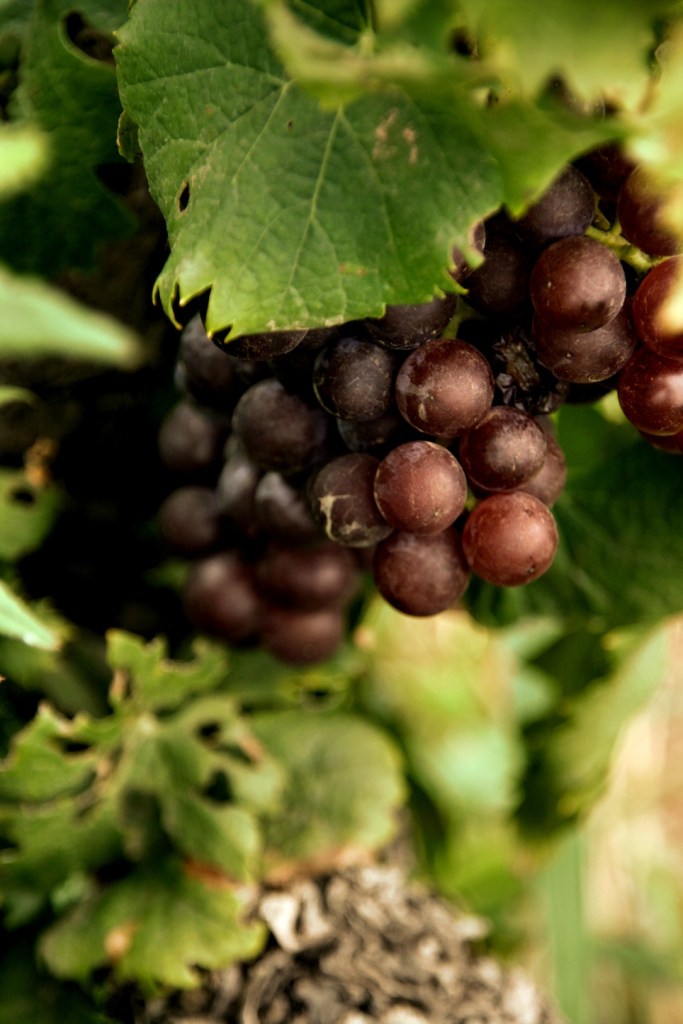
Today I pulled from my bookshelf a book I bought back in 2000 but have opened it only a few times – The Nation’s Favourite Twentieth Century Poems edited by Griff Rhys Jones and published by the BBC. For sure it is an interesting collection. The poem “Sometimes” caught my eye as I turned the pages. However on reading more about the poem from other sources I discovered that the poet dislikes the poem so much that she begs her name not be attached to it! She believes she can and does write better poems, well “sometimes”, I guess! Therefore, today I attach with the poem some of the poets instructions if one is to use the poem! I do try always to observe copyright. Sometimes though we need to be reminded of hope and optimism just like the way the muscadel grape (S. Africa) faces down frost and the way the sun will eventually melt hard frozen snow. Perhaps there is within each of us some hard frozen edges that need to be melted. Please pause and ponder. As the poet asks I will not print her name!
Sometimes
Sometimes things don’t go, after all,
from bad to worse. Some years, muscadel
faces down frost; green thrives; the crops don’t fail.
Sometimes a man aims high, and all goes well.
A people sometimes will step back from war,
elect an honest man, decide they care
enough, that they can’t leave some stranger poor.
Some men become what they were born for.
Sometimes our best intentions do not go
amiss; sometimes we do as we meant to.
The sun will sometimes melt a field of sorrow
that seemed hard frozen; may it happen for you.
Poet’s note and her choice of “bold” text!
“It’s OK to put it on personal blogs, if you’re a student, you can use it for coursework, if you’re an exam board, you cannot use it as an exam question. Not that you’ll listen, of course – exam boards are the world’s rudest bodies, who reproduce work without either asking or paying. if you want it for a non-charitable poetry anthology, the answer’s no. I will allow it to be read for charitable purposes (NB NOT ones which proselytise on behalf of any religion, and NOT medical ones which fund research on animals, and I won’t change my mind on that for anyone, so please don’t ask). But I would still refuse permission for actual reproduction, unless it was a charity I felt very strongly about. if you’re an “inclusive language” fanatic who wants to replace “man” with “human being” and ruin the scansion, don’t you dare!!! and if you do quote or reproduce it, I would rather you left my name off. I really do hate it that much.”
Prayer:
Lord God,
may your breath
stir within me and
might your Holy Spirit
fill my sail.
Help me this day,
to see in the ordinary things
something of Your extraordinary wonder.
Help me to see in the leaves as they
fall from the trees something of the
miracle of the seasons.
Help me to see, in the people I pass,
in the friends who speak my name,
and in my family near and far, that they too
have the wind of God’s Spirit blowing upon
and within them.
Fill us all with the breath of your Spirit,
today and always. Amen
 Prayers, Poems, and Christian Ponderings
Well now this post is enjoyable and has brought out my curiosity about who the poet is and why she dislikes the poem so much!
Like you, I have found some answers and she has proven her perception is accurate. That is, many people, apparently including myself, take it as a testament to hope and optimism, which was not entirely her intent, and in her own assessment believes that she was not successful in conveying the meaning she had hoped to achieve. That said, she has created a clever means of increasing her blog readership by saying, use the poem, but not my name! Or is that just my icy edge showing?
I am a bit conflicted since the pleasure in poetry for me is the freedom of personal interpretation. Since the poem seems to have earned fairly widespread appeal and use in a variety of settings, my guess is that the poet gets at least some pleasure from this piece, and the so-called hatred of the poem is but one small piece of the story behind it. And that piece belongs only to the poet.
And yes, part of what makes us human are those icy edges, those moments of greed or selfishness, hostility or heartlessness. But what we also share in common are the many opportunities to melt those edges and prevent the ice from returning.
LikeLike
Apparently Griff Rhys Jones, the Editor of the Nation’s Favourite 20th century Poems, as well as the countless people who voted for it, thought this poem was of Hope, as he included it with others, in the section , “for there is good news yet to hear, and fine things to be seen”, by Chesterton , in this book. One would think Sheenagh Pugh would be humbled at having her poem so chosen…… June M.
LikeLike