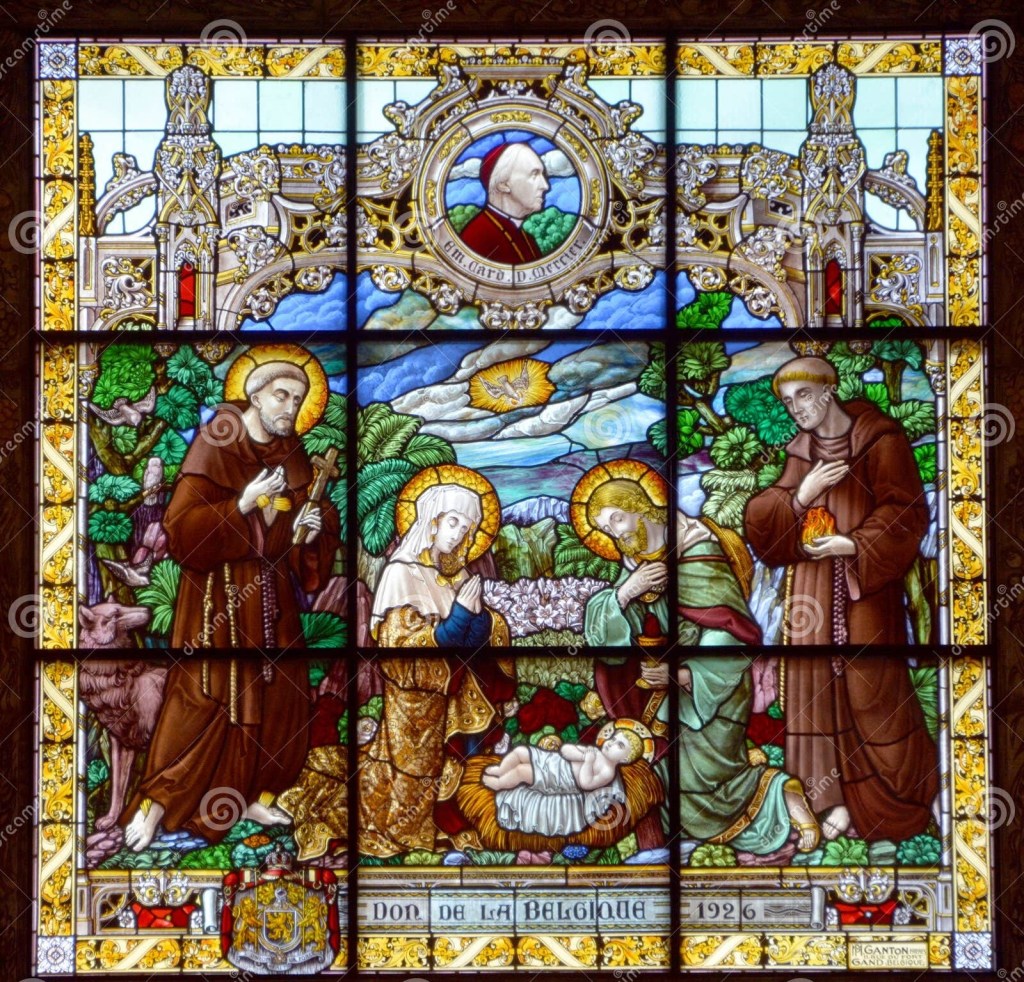
The spontaneous ceasefire on Christmas Eve and Christmas Day in 1914 came about as British, Belgian, and French soldiers put down their weapons and climbed out of their trenches and joined with German soldiers singing Silent Night Holy Night! A moment of palpable peace in the madness of war, a glimmer of grace amidst the gruesome reality of evil. If only such a glimmer of hope and holiness could touch us once again in the midst of war. The photo above comes from The Church of the Nativity in Bethlehem, in the West Bank where no Christmas services will be held this year due to the war. The church will remain empty, as will the streets and sadly all too many homes will be empty! Yet Christmas is about the emptying of God to be in the midst of human flesh with all its vulnerability. Luci Shaw’s poem Kenosis – a Greek word which translates emptying is a poem of how vulnerable God became when Word became flesh. Notice how the poet herself empties any use of theological jargon and describes the beauty of God’s risk. It is this story that gives us palpable hope and more than a glimmer of grace to live in the present no matter what. Ponder this poem and in silence behold the surprise of grace and love.
Kenosis
In sleep his infant mouth works in and out.
He is so new, his silk skin has not yet
been roughed by plane and wooden beam
nor, so far, has he had to deal with human doubt.
He is in a dream of nipple found,
of blue-white milk, of curving skin
and, pulsing in his ear, the inner throb
of a warm heart’s repeated sound.
His only memories float from fluid space.
So new he has not pounded nails, hung a door
broken bread, felt rebuff, bent to the lash,
wept for the sad heart of the human race. Luci Shaw 1928-
Prayer:
Lord God,
we count the days to Christmas
while others count the days of loved ones held hostage,
the days of war and grief.
We count gifts for family and friends while so many
seek to find family and friends amidst the dust of debris
and the silence of ruins and rubble.
Come, O Lord, and dwell with us,
teach us your way, show us your love, make the miracle
of grace alive in our hearts and in our homes.
Come, O Lord, help us to be courageous not in making war
but in making peace.
In silence, hear our prayer. Amen.
 Prayers, Poems, and Christian Ponderings
It would be interesting to have had an opportunity to ask a soldier what it felt like to participate in the Truce. Did they have hope about the war ending? Was their hope about winning or ending the war, or both? Were they aware that their superiors didn’t approve for fear that camaraderie with the enemy was a bad thing? Did a few hours of hope make a difference in their war lives? Was the Truce a missed opportunity? And of course they had no way of knowing that it would be 4 years before the war’s end. Hope and disappointment seem an all too common pair.
I recall finding a poem called Show Me the Way, clipped from a newspaper during WW2, sent in a letter from my mother to my grandmother. While I can’t recite its entirety, I recall the first line; I wish that we had not missed the way that led to peace. Hope and regret.
Hope carries a lot of weight and I believe that we have it because we can’t afford not to, but somewhere deep in our intellect, we know it doesn’t always make any difference.
The gentle poem is indeed hopeful, but I can’t help but see the word “yet” at its ending.
LikeLike